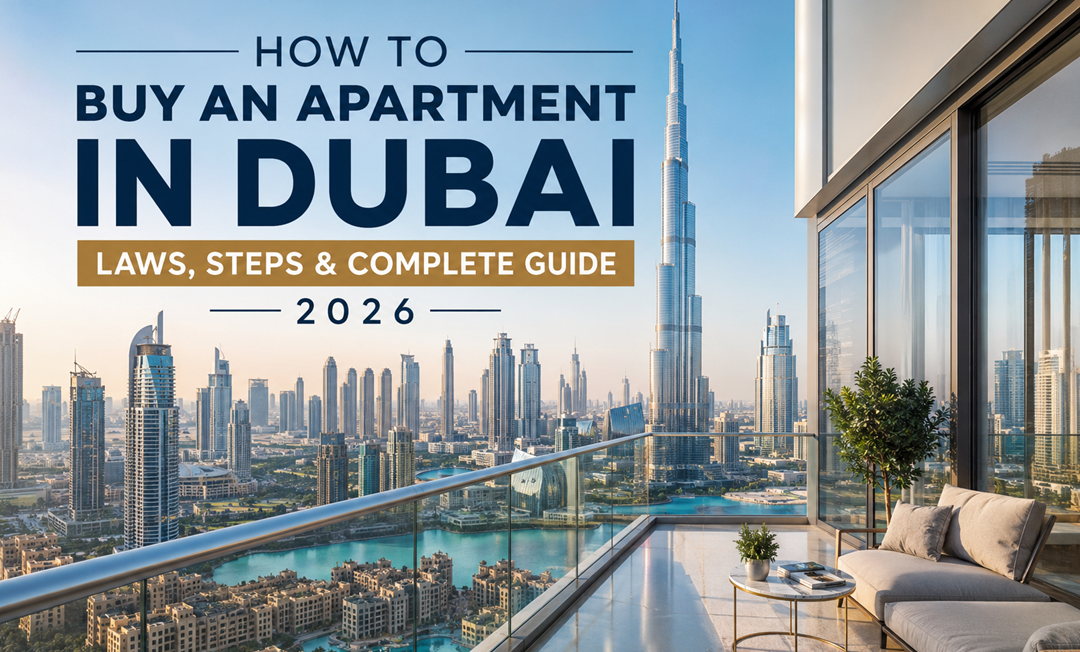
Dubai remains one of the world’s most attractive real estate markets for investors and homebuyers. With a tax-friendly environment, modern infrastructure, high rental yields, and strong capital appreciation potential, purchasing an apartment in Dubai can be a rewarding investment.
Whether you are a UAE resident, expatriate, or international investor, understanding the legal requirements and buying process is essential. This guide explains how to buy an apartment in Dubai, the laws involved, costs to consider, and the step-by-step procedure for 2026.
Why Buy an Apartment in Dubai?
Dubai’s property market continues to attract global investors due to several advantages:
- 100% foreign ownership in designated freehold areas
- No annual property tax
- High rental returns compared to many global cities
- Strong infrastructure and economic growth
- Residency visa opportunities through property investment
- Wide range of luxury and affordable apartments
- Transparent real estate regulations
Popular apartment investment areas include Downtown Dubai, Dubai Marina, Business Bay, Palm Jumeirah, Jumeirah Village Circle (JVC), and Dubai Creek Harbour.
Can Foreigners Buy Apartments in Dubai?
Yes. Foreign nationals can purchase apartments in Dubai’s designated freehold zones.
The Dubai government allows non-UAE nationals to:
- Buy residential apartments
- Own properties outright in freehold areas
- Sell or lease their properties
- Inherit property ownership
- Apply for certain residency visas based on investment value
This investor-friendly policy has significantly increased international demand for Dubai real estate.
Understanding Dubai Property Laws
Before purchasing an apartment, buyers should understand the legal framework governing real estate transactions.
Freehold Ownership
Freehold ownership grants buyers complete ownership of:
- The apartment unit
- The land share associated with the property
- The right to sell, lease, or transfer ownership
Foreign investors primarily buy an Apartment in Dubai properties in freehold communities.
Leasehold Ownership
Leasehold ownership provides rights to use the property for a fixed period, typically up to 99 years, while the land ownership remains with the freeholder.
Most international buyers prefer freehold properties for long-term investment benefits.
Step-by-Step Process to Buy an Apartment in Dubai
1. Determine Your Budget
Start by calculating your total investment budget, including:
- Apartment purchase price
- Dubai Land Department (DLD) fees
- Registration charges
- Mortgage expenses (if applicable)
- Agency commissions
- Service charges
Having a realistic budget helps narrow down suitable options.
2. Choose the Right Location
Location significantly affects rental income and future appreciation.
Popular apartment locations include:
| Area | Best For |
|---|---|
| Downtown Dubai | Luxury living |
| Dubai Marina | Rental income |
| Business Bay | Professionals |
| JVC | Affordable investment |
| Palm Jumeirah | Premium waterfront properties |
| Dubai Creek Harbour | Long-term growth |
Consider factors such as transportation, schools, shopping centers, and future developments.
3. Select a Property
Evaluate apartments based on:
- Developer reputation
- Building quality
- Floor plan
- Amenities
- Maintenance costs
- Rental demand
- Future resale value
Always inspect the property personally or through a trusted representative.
4. Make an Offer
Once you find a suitable apartment:
- Negotiate the purchase price
- Agree on payment terms
- Confirm inclusion of parking and amenities
- Verify ownership details
A written agreement helps avoid misunderstandings.
5. Sign the Memorandum of Understanding (MOU)
The Memorandum of Understanding (Form F) outlines:
- Purchase price
- Buyer and seller information
- Payment schedule
- Transfer date
- Transaction conditions
Both parties sign the document and typically provide a deposit.
6. Obtain a No Objection Certificate (NOC)
The property developer issues a No Objection Certificate confirming:
- No outstanding service charges
- No pending disputes
- Eligibility for ownership transfer
This is a mandatory step in most resale transactions.
7. Transfer Ownership
Ownership transfer occurs at the Dubai Land Department.
Required documents usually include:
- Passport copies
- Emirates ID (if applicable)
- Signed sales agreement
- NOC
- Payment proof
- Mortgage documents (if applicable)
After registration, the buyer receives the official title deed.
Dubai Land Department Fees
When purchasing an apartment, buyers must account for government charges.
Common Costs
| Fee Type | Approximate Cost |
|---|---|
| DLD Transfer Fee | 4% of property value |
| Registration Fee | Applicable as per property value |
| Real Estate Agent Fee | Typically 2% |
| Mortgage Registration Fee | Applicable for financed purchases |
| NOC Fee | Depends on developer |
These costs should be included in your overall investment budget.
Buying Off-Plan vs Ready Apartments
Off-Plan Apartments
Off-plan properties are purchased directly from developers before completion.
Advantages
- Lower entry prices
- Flexible payment plans
- Potential capital appreciation
- Modern designs and amenities
Disadvantages
- Construction delays
- Market fluctuations
- Waiting period before rental income
Ready Apartments
Ready properties are completed and available for immediate occupancy.
Advantages
- Immediate possession
- Instant rental income
- Easier valuation
- Lower project completion risk
Disadvantages
- Higher purchase prices
- Limited payment flexibility
Mortgage Options to Buy an Apartment in Dubai
Many buyers finance their purchases through UAE mortgage providers.
Common requirements include:
- Proof of income
- Bank statements
- Passport and visa documents
- Credit assessment
- Down payment contribution
Mortgage eligibility varies between residents and non-residents.
Working with a mortgage advisor can help identify competitive financing options.
Documents Required to Buy an Apartment in Dubai
Buyers typically need:
- Valid passport
- UAE visa (if resident)
- Emirates ID
- Proof of address
- Bank statements
- Mortgage approval letter (if financed)
Additional documentation may be required depending on the transaction structure.
Benefits of Investing in Dubai Apartments
High Rental Yields
Dubai frequently offers rental returns between 5% and 8% or higher in prime locations.
Tax Advantages
Investors benefit from:
- No annual property tax
- No capital gains tax in many cases
- No tax on rental income under current regulations
Growing Population
Population growth continues to support housing demand across the emirate.
World-Class Infrastructure
Dubai offers:
- Modern transportation systems
- International airports
- Healthcare facilities
- Premium educational institutions
- Global business hubs
These factors contribute to long-term property value growth.
Common Mistakes to Avoid
When purchasing an apartment in Dubai, avoid these errors:
- Skipping legal due diligence
- Ignoring service charge costs
- Buying solely based on price
- Not researching the developer
- Failing to verify title documents
- Underestimating transaction expenses
- Overlooking rental demand trends
Professional legal and real estate guidance can reduce risks significantly.
Best Areas to Buy Apartments in Dubai in 2026
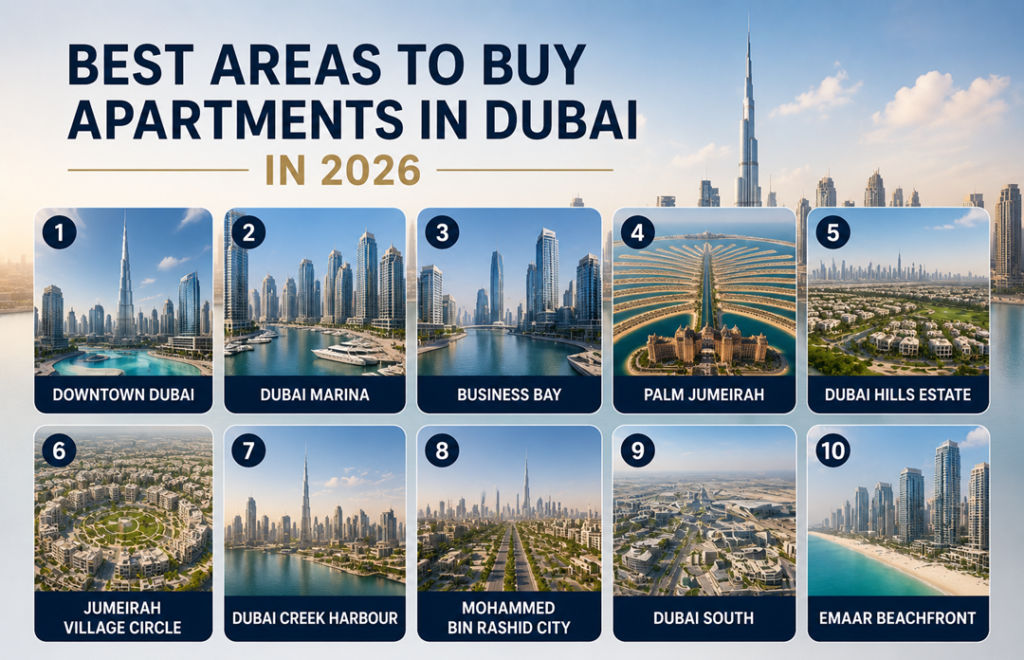
Some of the strongest-performing apartment markets include:
- Downtown Dubai
- Dubai Marina
- Business Bay
- Palm Jumeirah
- Dubai Hills Estate
- Jumeirah Village Circle
- Dubai Creek Harbour
- Mohammed Bin Rashid City
- Dubai South
- Emaar Beachfront
Each area offers different investment opportunities based on budget and objectives.
Final Thoughts
Buying an apartment in Dubai is a straightforward process when you understand the legal requirements, ownership regulations, and transaction procedures. With foreign ownership opportunities, attractive rental yields, and a globally recognized real estate market, Dubai remains one of the best destinations for property investment in 2026.
Before making a purchase, conduct thorough research, verify all legal documents, assess total ownership costs, and work with experienced real estate professionals. By following the proper legal steps, you can confidently secure an apartment that meets both your lifestyle and investment goals.